

Vale at the window, 9:40 p.m. Bed at 10, on linen, as it has been for five years.
The Leif & Sons Journal | Life & Work
Why the AI Tech Founder Trying to Live to 150 Refuses to Sleep in Anything but Linen
Elias Vale has spent millions trying to live to 150. Most of it bought him a chart. One thing became non-negotiable, and he will not stop talking about it: the sheet on his skin.
By Rachel Thorne|Sept. 14, 2026|4 min read
Elias Vale has spent, by his own estimate, a little over three million dollars trying to live to 150. A sleep researcher on the clock, a longevity physician, a glucose sensor in his arm and 142 variables tracked daily under a plan he calls Protocol 150. He is 49.
Ask him what actually worked and the list is short. A cold room. A fixed schedule. No screens after nine. And one thing he does not call a habit but a rule. It started when his researcher looked at eight months of data and asked what his sheets were made of. Polyester satin with a "cooling finish". He threw them out that week.
I have spent millions finding out how to live longer. Most of it bought me a chart. One non-negotiable became very clear, and it is not a supplement. It is linen bedding. I have not slept on anything else for five years and I will not.Elias Vale
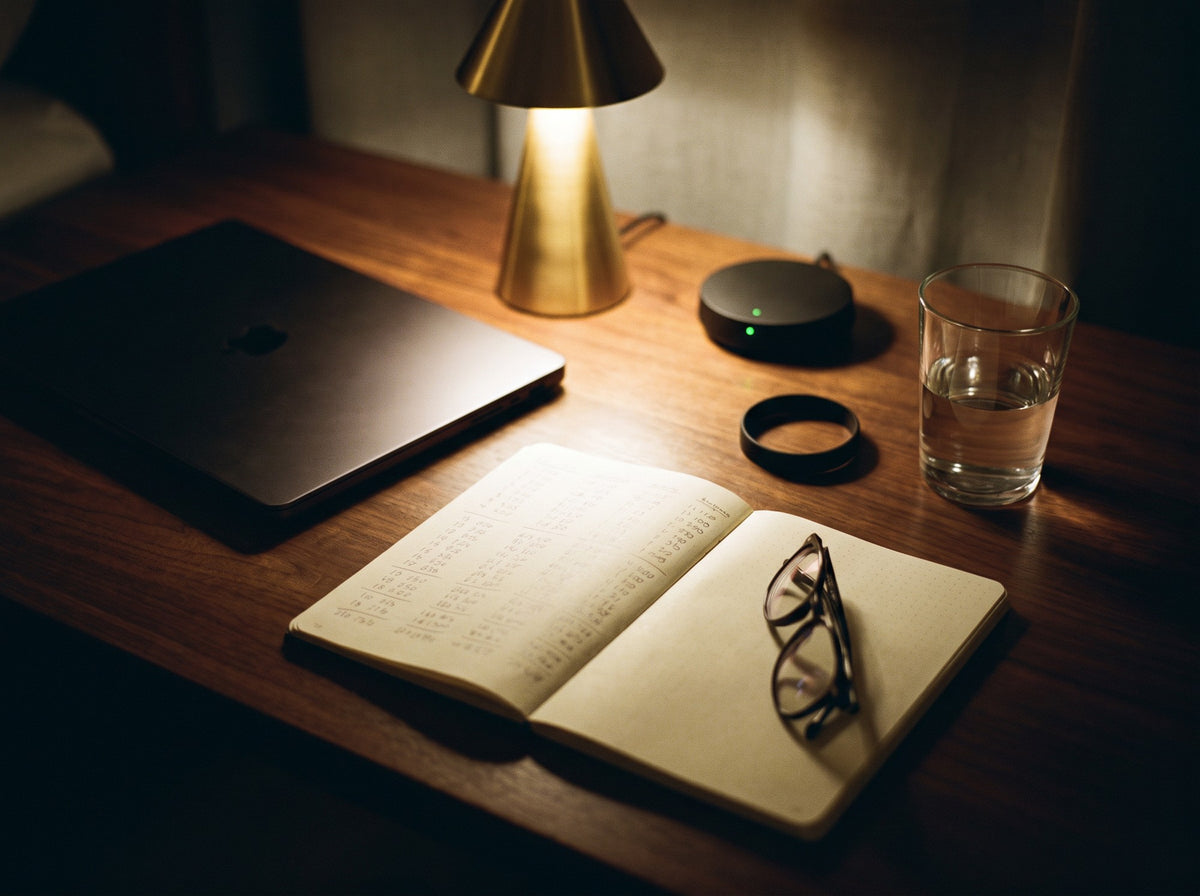
9 p.m. Laptop shut. The notebook goes to the nightstand, the phone does not.
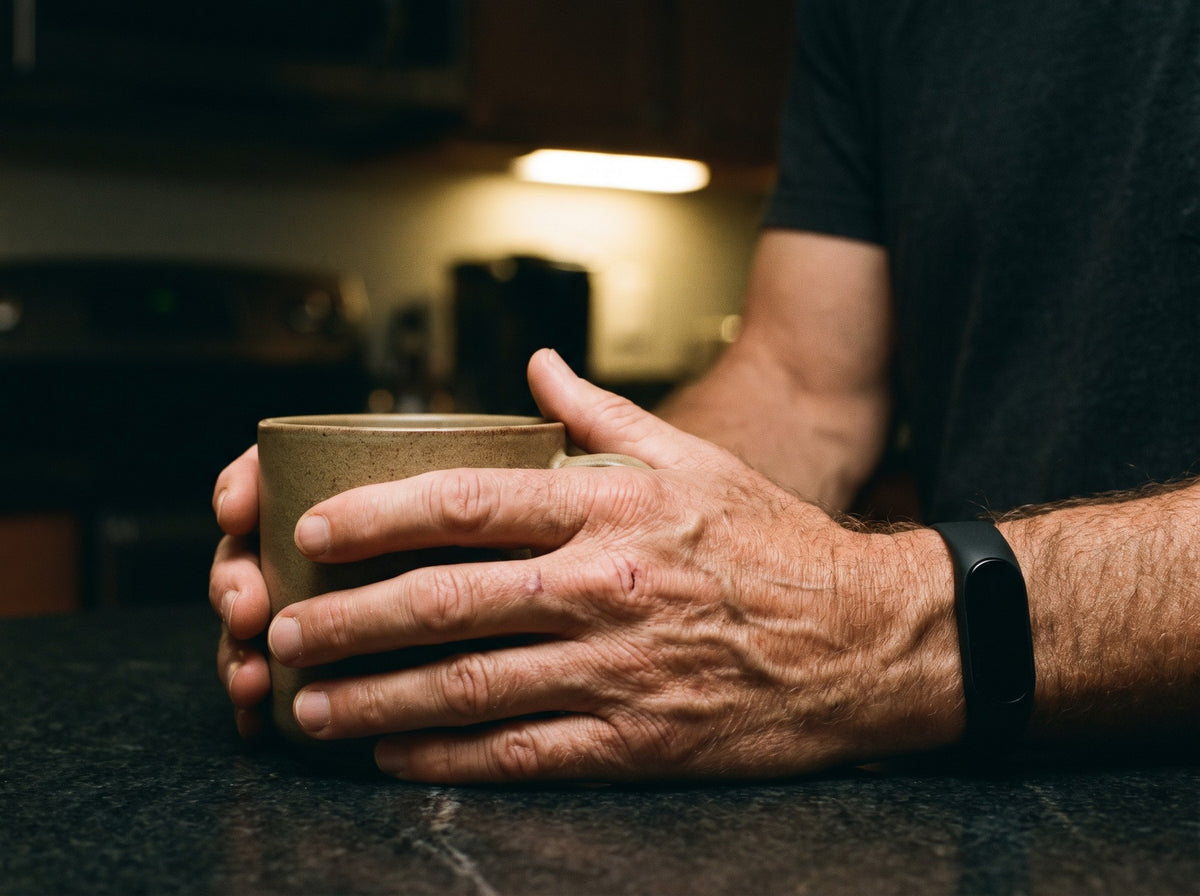
The kitchen counter, next morning. Every guest gets the same speech about the sheets.
Three numbers before his list
Bad sleep is usually a heat problem. The sheet is where the heat goes.
of US adults say they sleep too hot at least sometimes. Vale was one of them and did not know it.
Gallup, 2023 4of its own weight in moisture is what flax linen absorbs before it feels damp. Polyester holds close to none.
Textile Learner, flax fibre properties 6warmer than linen at the skin by 3:30 a.m. on cool-touch synthetic sheets. Our own test, 24 beds.
Leif & Sons Night Climate Study, 202650% OFF TODAY + FREE SHIPPING
Shop the linen sheets30-night trial. Free returns. The sheets he sleeps on.
The reasons
Why he refuses to sleep on anything else
Seven reasons, in his order. His words are quoted. The facts are ours, cited at the bottom.
Reason 01 of 07
He falls asleep in 18 minutes. It used to take 51.
His tracker logged 51 minutes to fall asleep on polyester satin. On linen, same room, same 66 degrees, it is 18.
You cannot fall asleep until your core temperature drops. Satin felt cold for thirty seconds, then it sealed me in. Linen lets the heat out.
Elias Vale
The fact
Falling asleep and a drop in core body temperature happen together, and the body sheds that heat through the skin1. The recommended bedroom range is 60 to 67 degrees3.
Why linen
Flax conducts heat away from the body faster than synthetic blends8. The body cools, so sleep comes.
Reason 02 of 07
The 3 a.m. wake-up stopped.
Three years of the same graph: three hot wake-ups a night after 2 a.m. New thermostat, new mattress, new routine. Nothing moved it. The sheets did.
Polyester holds almost no water. My own sweat sat on my skin as a warm wet film. Linen pulls it off and lets it dry. Most nights now, no wake-up.
Elias Vale
The fact
Heat under bedding increases wake-ups and cuts deep and REM sleep, and humid heat is the worse version2. 94% of self-described hot sleepers wake at least once a night from heat5.
Why linen
Linen absorbs up to 20% of its weight in moisture before it feels damp6. The wet film never forms.
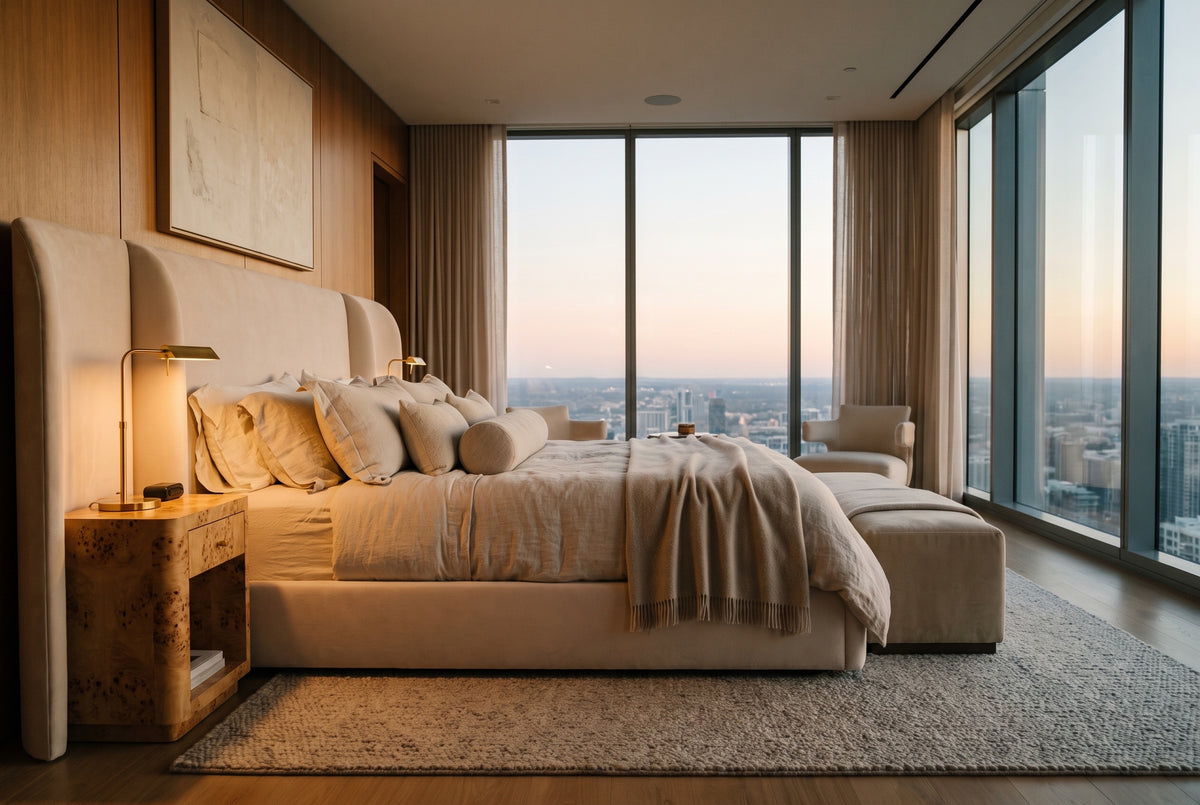
Eight months of sleep data. The answer was lying on top of the sensor.
Reason 03 of 07
He tested every fabric. Only flax stayed dry.
He ran a bake-off: bamboo, Tencel, cotton percale, cooling polyester, two silks and linen. A week each, humidity sensors under the sheet.
Flax was the only one still dry at my back at hour six. It wicks like a towel and cools like a radiator, and the weave is open, so air keeps moving.
Elias Vale
The fact
In a 2026 lab comparison, 100% linen scored the highest moisture-management capacity of the fabrics tested7.
Why linen
Open weave plus flax fibre. Sweat leaves, air moves, the sheet stays dry from the first hour to the last.
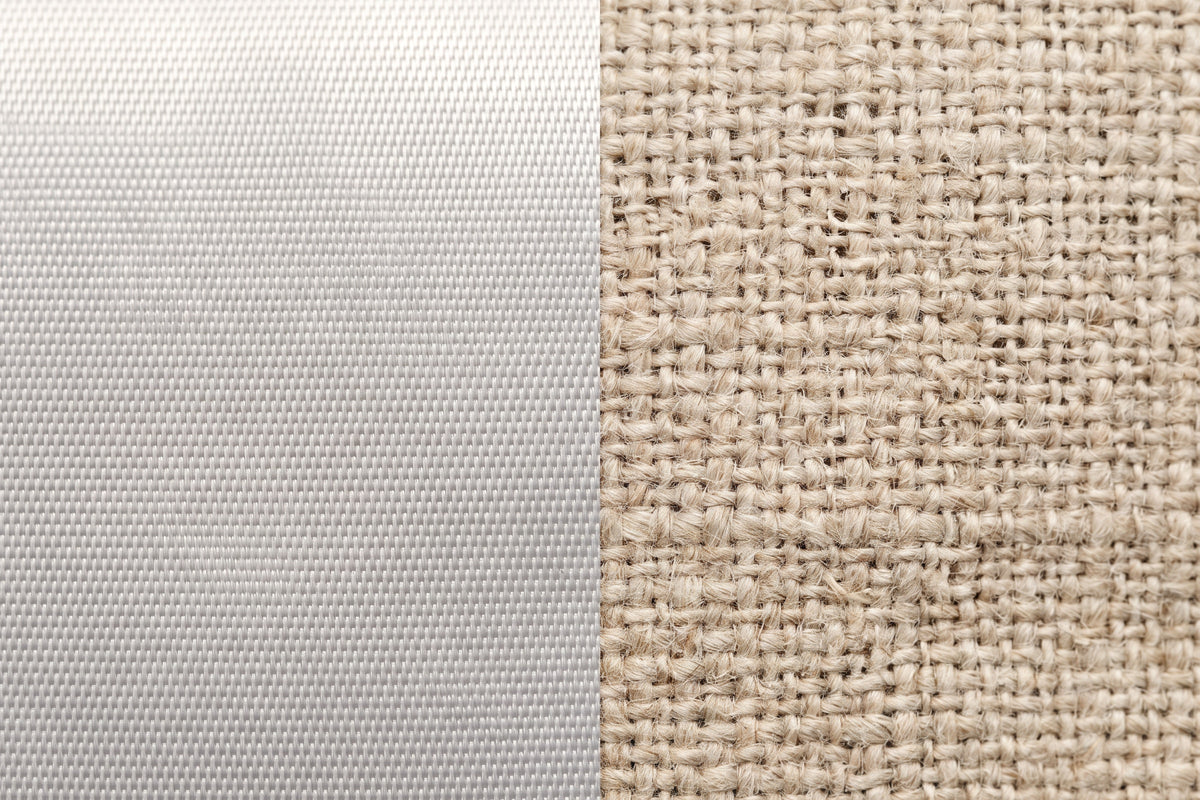
Under the loupe: the sealed synthetic weave on the left, open flax on the right.
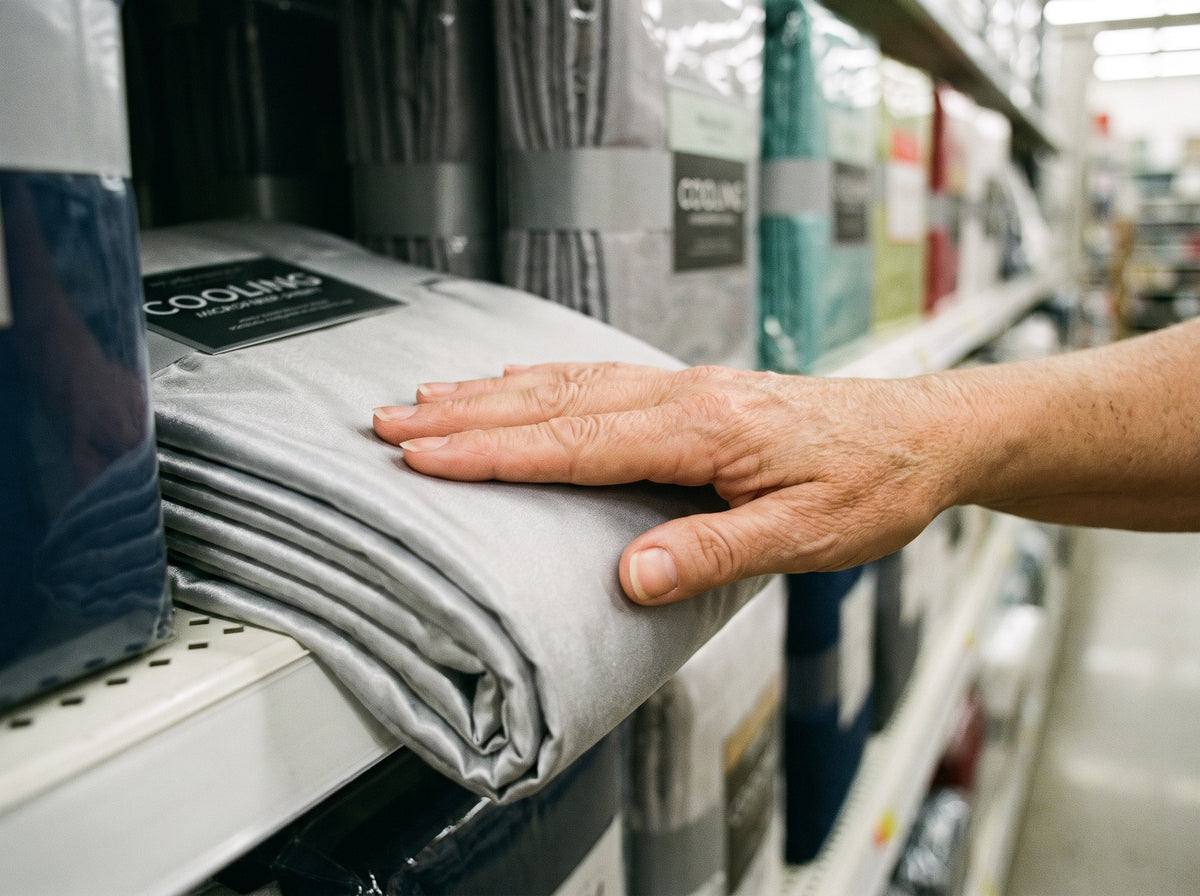
The "cooling" sheet in the store. Cold for thirty seconds. It is a coating, and coatings wash out.
Reason 04 of 07
His dermatologist stopped arguing.
He sleeps on his side, like 69% of Americans. Eight hours of pressure on one cheek. Slick satin was keeping his skin damp all night, and damp skin drags.
Linen keeps my skin dry, so the pillow slides instead of grips. My face stopped looking like the pillow in the morning. My dermatologist did not prescribe linen. She also did not argue.
Elias Vale
The fact
Friction between skin and textiles rises as the skin gets more hydrated12. Compression and shear on the face in side sleeping are what create sleep wrinkles10. 69% of Americans sleep on their sides11. Flax textile leachables reduced Staphylococcus aureus biofilm where cotton did not13.
Why linen
Dry skin, less drag, fewer creases. He calls a linen pillowcase the cheapest skincare he owns.
Reason 05 of 07
There is nothing to wash out.
His old "cooling" sheets were polyester with a chemical finish. He calls them a subscription he cancelled in the washing machine.
Every wash took a little of the coating off. Linen has no coating. The cooling is the fibre itself. Wash it a hundred times and it works the same.
Elias Vale
The fact
Cooling finishes are microcapsules bonded to the fibre. Repeated laundering damages them and lowers the effect over time9.
Why linen
No coating, no blend, nothing added. Night one feels like night five hundred.
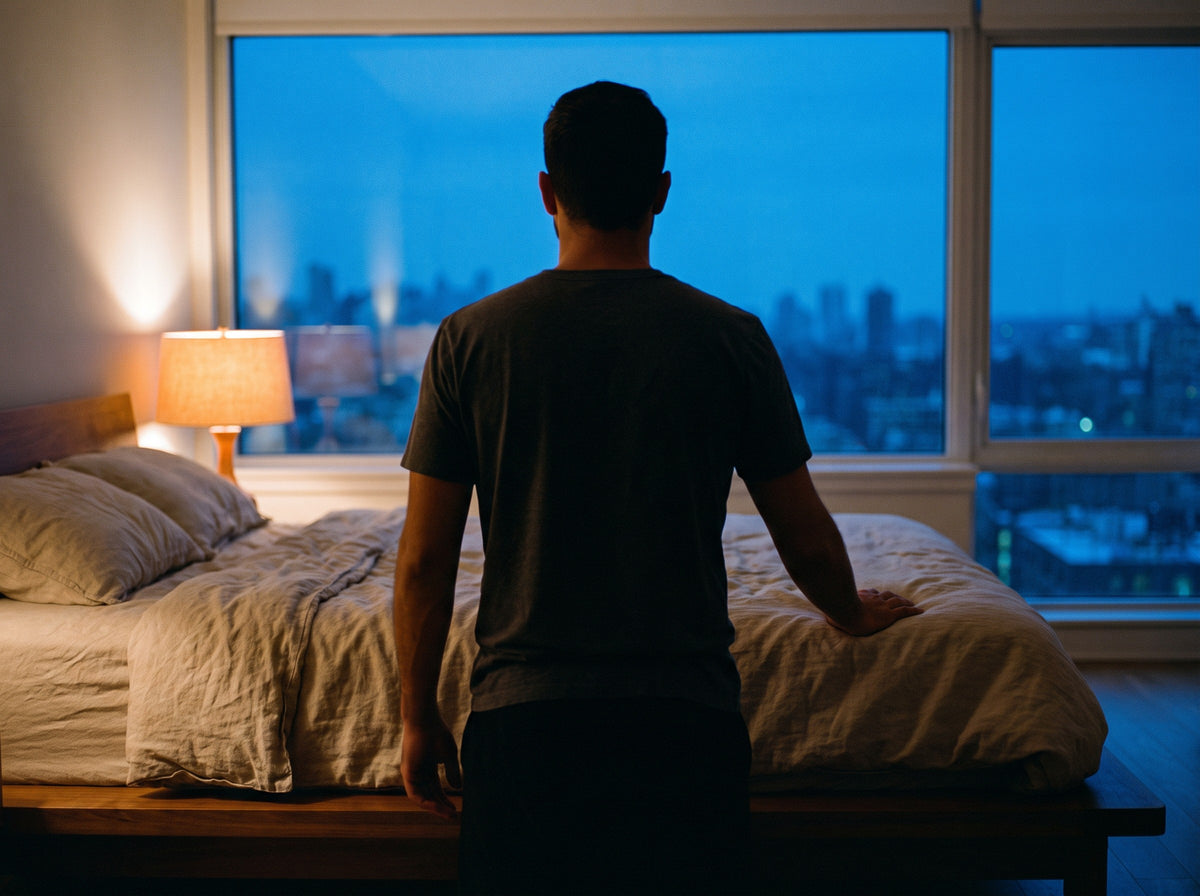
Year five. Same fabric, softer every year.
Reason 06 of 07
Five years on, his first set is still in use.
The linen he bought five years ago is on the guest bed. He calls it the softest thing in the house.
Everything else I buy gets worse with use. Linen gets better. Flax is stronger when it is wet, so washing breaks it in instead of wearing it down.
Elias Vale
The fact
Flax fibre strength increases by about 20% when wet6. That is why linen survives the wash cycle that thins cotton and strips coated polyester.
Why linen
Buy once. Wash it often. It gets softer, not thinner.
Reason 07 of 07
And then there is the frequency thing.
Press him and he will also tell you, with half a smile, about linen's "natural frequency", an idea that has circulated for centuries. He knows how it sounds.
I am an engineer. I know what an unproven claim looks like, and this is one. What I can measure is the temperature at my skin at 3 a.m. That moved. The rest I am allowed to enjoy.
Elias Vale

Two of the 24 matched beds in the Night Climate Study. Leif & Sons photograph.
What Leif & Sons measured
The Night Climate Study. Our test, our numbers.
24 matched beds, cool-touch synthetic sets against Leif linen, thermal cameras and humidity sensors at the skin for full nights. Our own test on our own product, not a peer-reviewed study.
Morning
The one thing he has stopped measuring
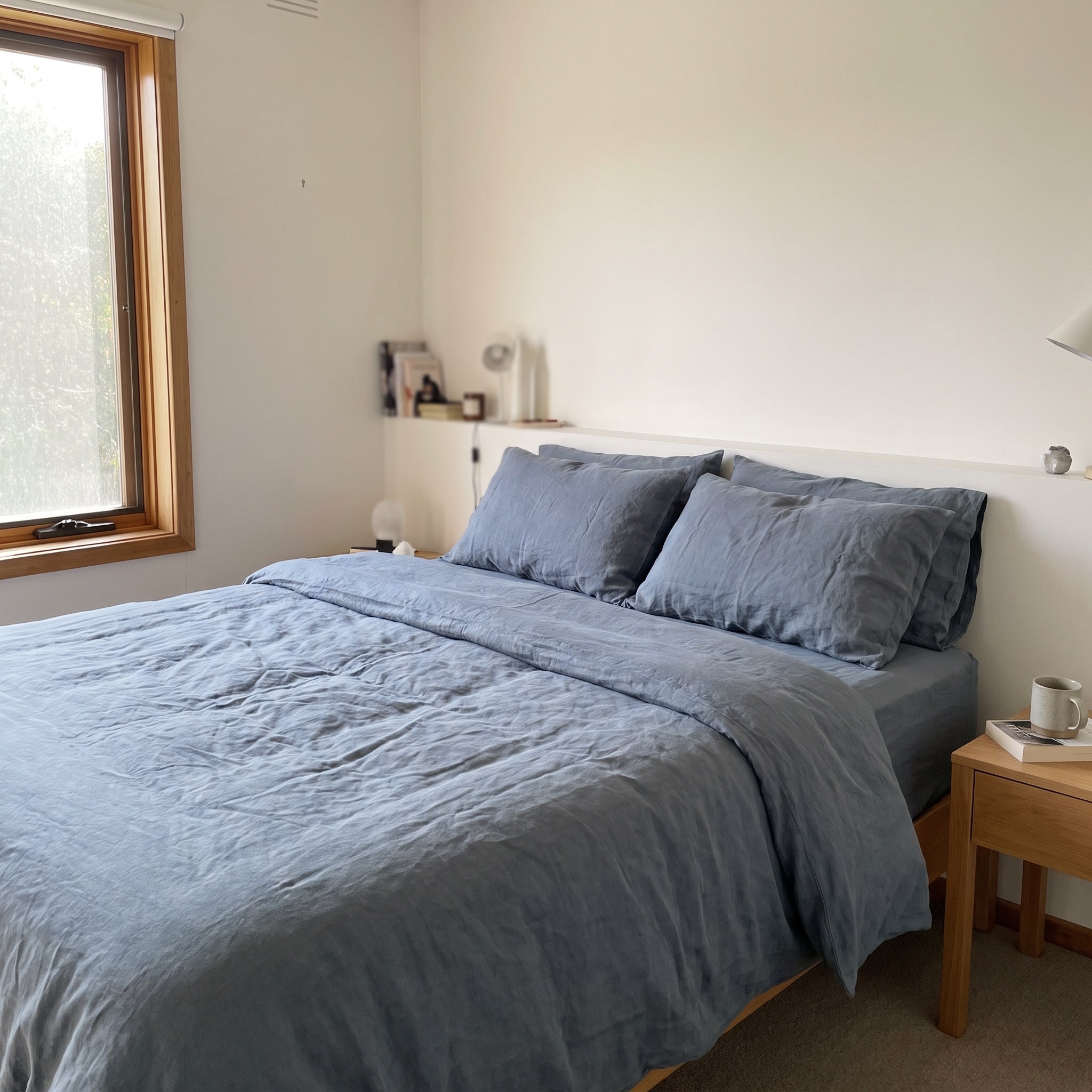
He logged the sheets for fourteen nights five years ago and then stopped, because the graph had moved and he knew why. "I spent three years measuring the room and never touched the bed," he says. "Linen cost a set of sheets and gave me back the second half of the night." The set on his bed today is Leif & Sons natural European linen.

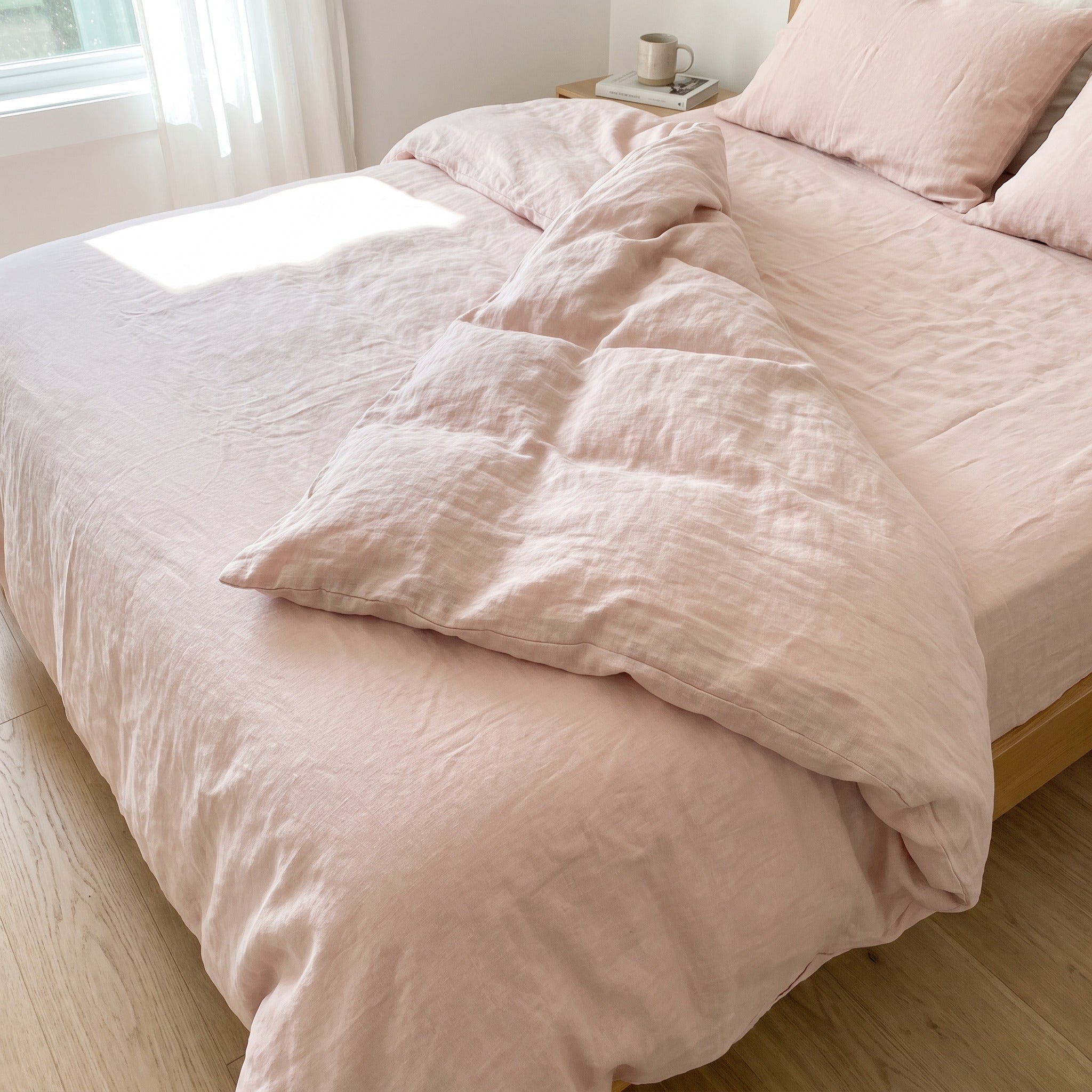
Pink
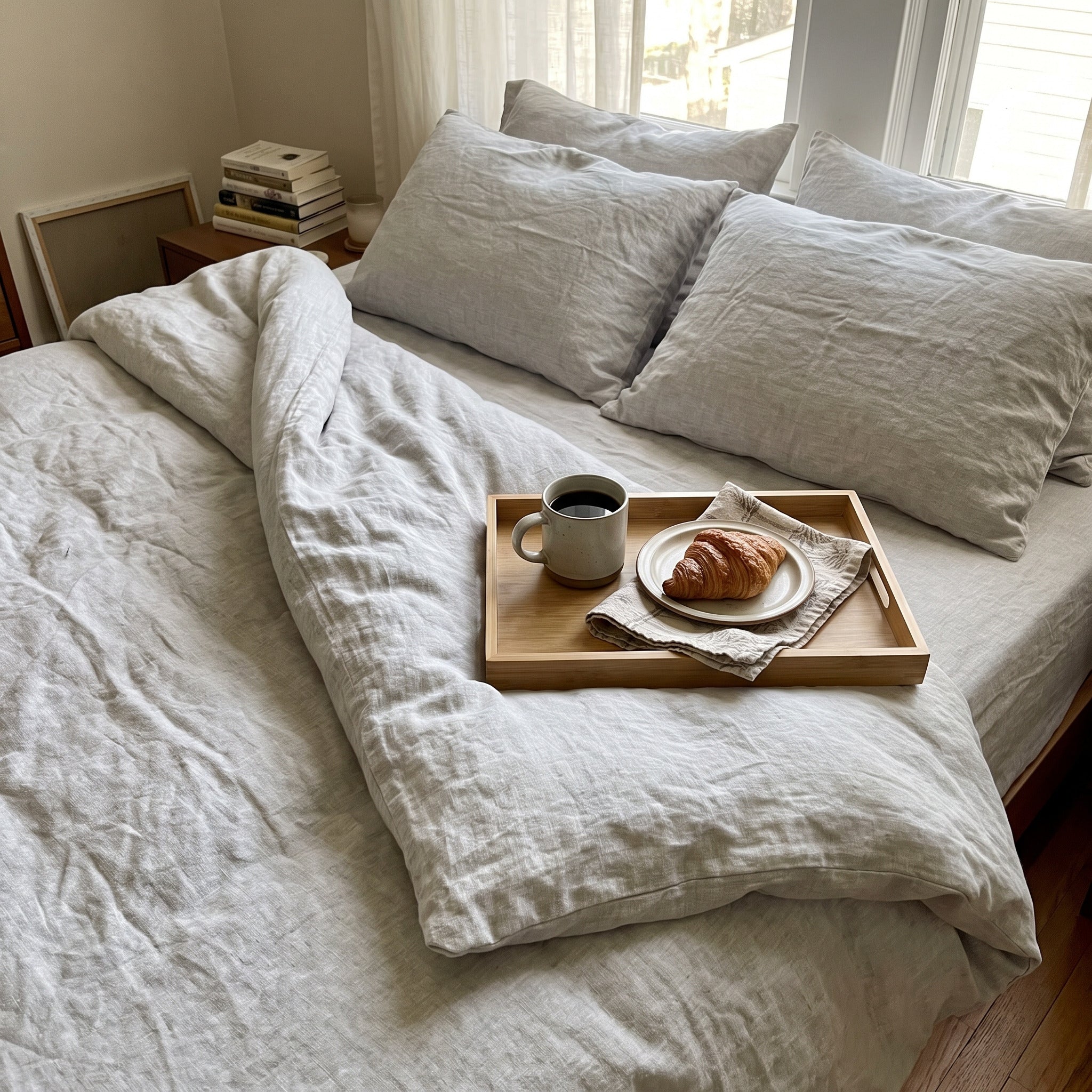
Gray
Blue
The sheets in this story
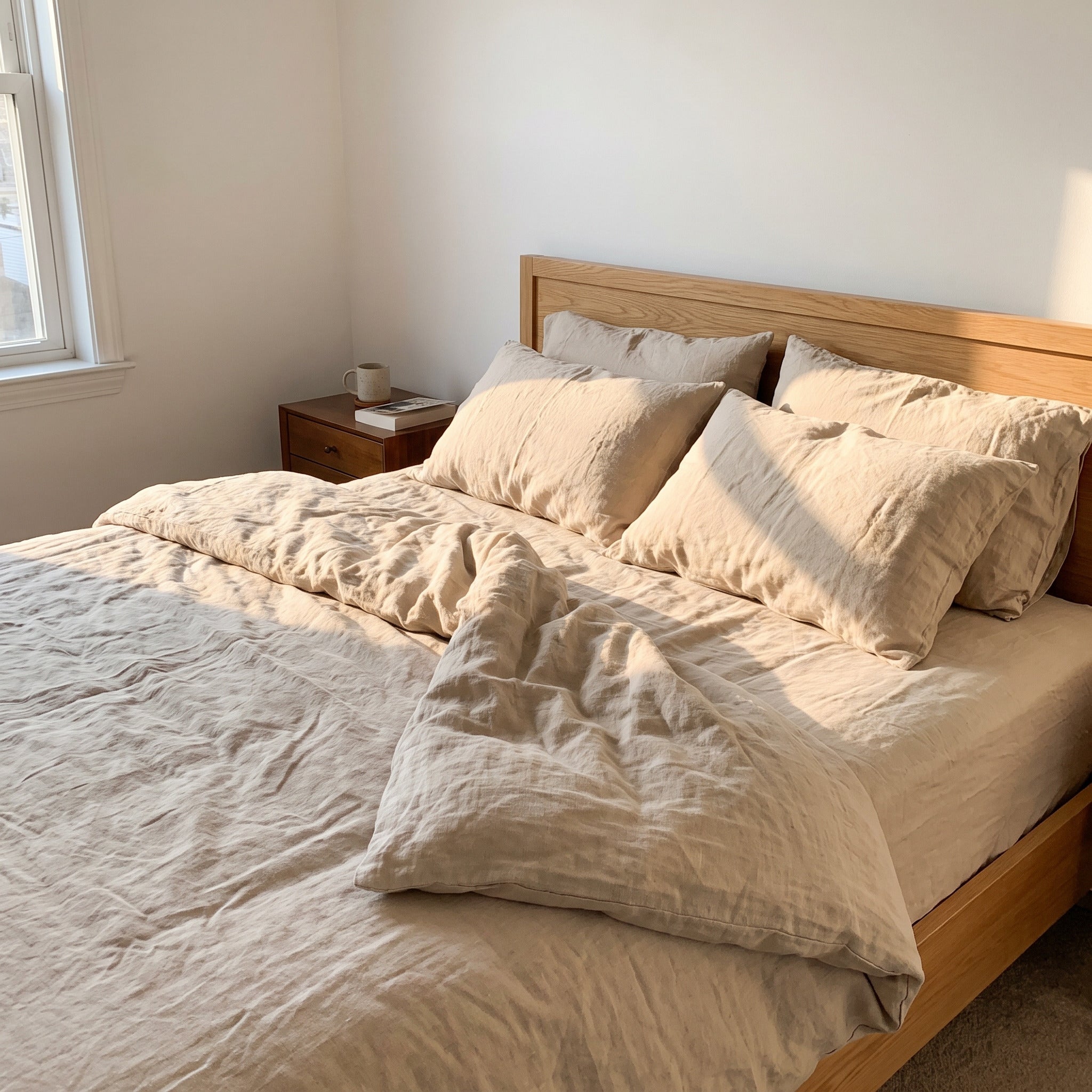
Leif & Sons natural European linen.
100% European flax, stonewashed soft and woven open so air keeps moving. No coating, no blend, nothing to wash out. In our own Seven-Night Sleeper Survey of 186 hot sleepers, 79% threw the covers off less often than on their previous sheets. Self-reported, unblinded and ours.
- Cooler at 3 a.m.: absorbs up to 20% of its weight in moisture, then releases it
- Kinder to skin: keeps the face dry, so less friction on the pillow
- No coating to wash out. Softer with every wash, stronger wet
- Seven colours, Twin to California King, deep 16 inch pockets


Rated 4.9/5 by 5,600+ American sleepers.
I run hot every night and these are the first sheets that actually breathe. No more kicking everything off at 3am. Two weeks in and I have not woken up damp once.
VerifiedMarianne K.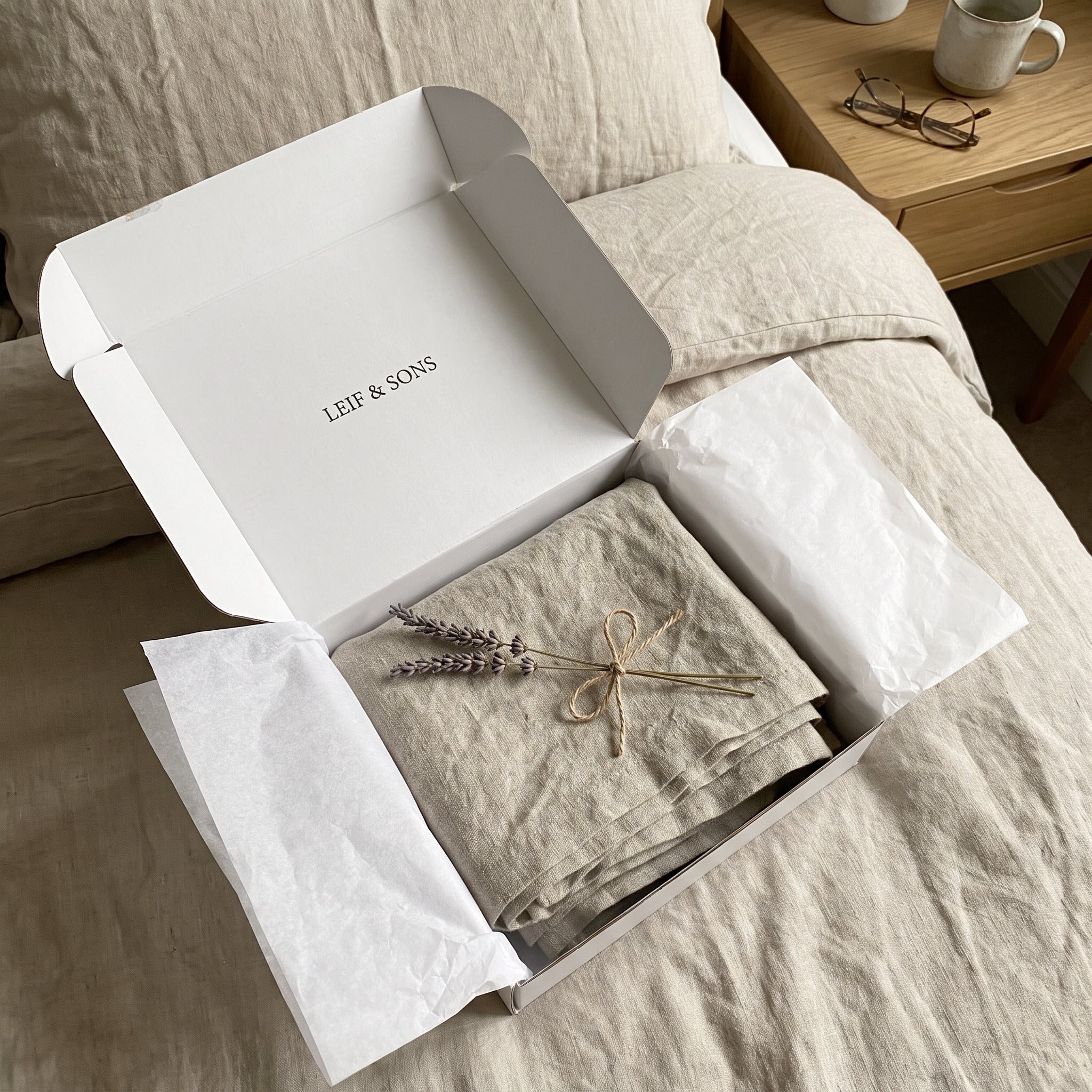
Crisp out of the bag, then buttery by the second wash. My mother had linen sheets and this is exactly how I remember them feeling.
VerifiedDeborah S.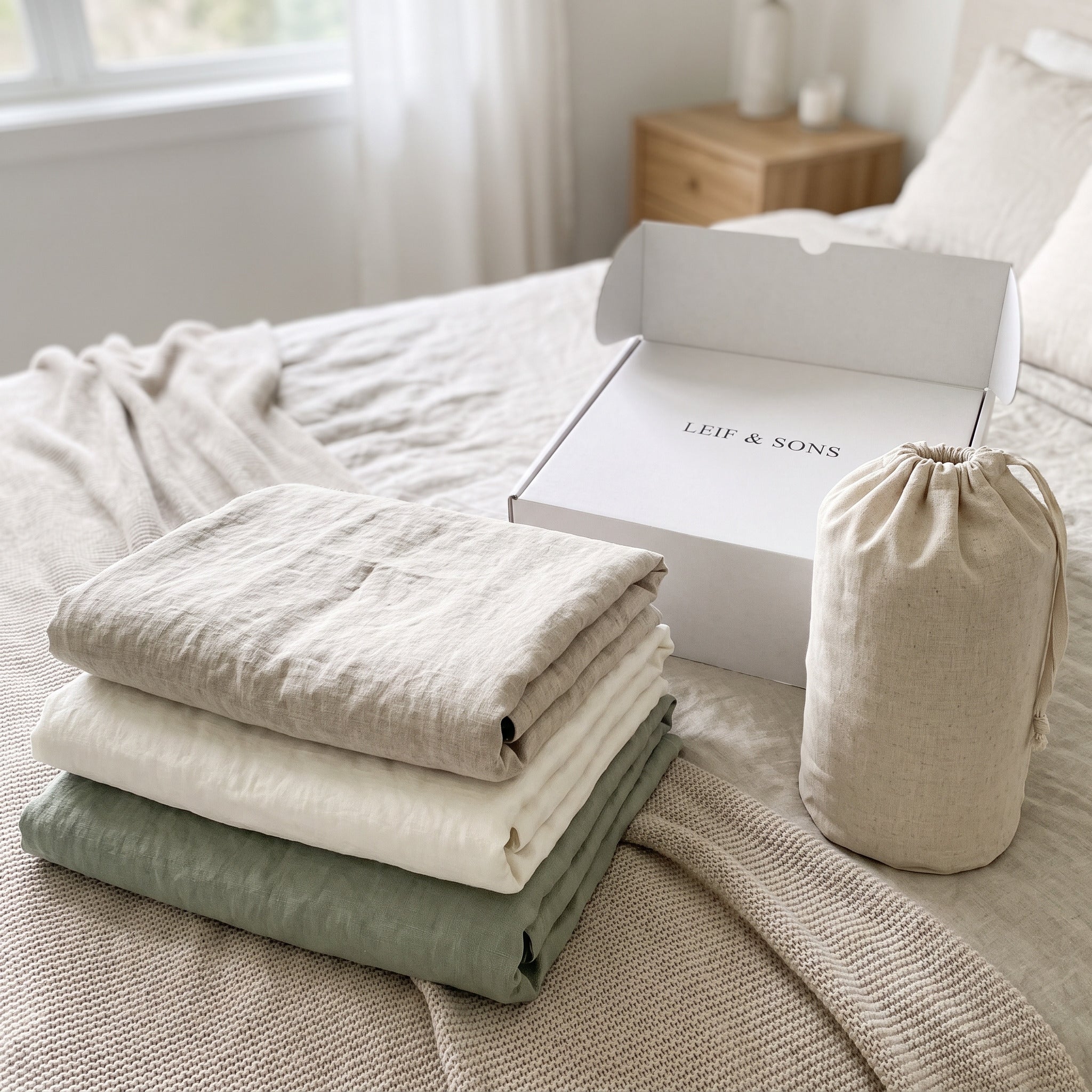
Arrived folded in a linen bag instead of a plastic sleeve. Small thing, but it told me what kind of company this is before I even opened it.
VerifiedJanet R.
Bought the beige for the guest room and now I want a set for every bed in the house. Looks plain in photos and expensive in person.
VerifiedChristine A.My husband and I have stopped fighting over the thermostat. He sleeps hot, I sleep cold, and somehow these work for both of us.
VerifiedPatricia L.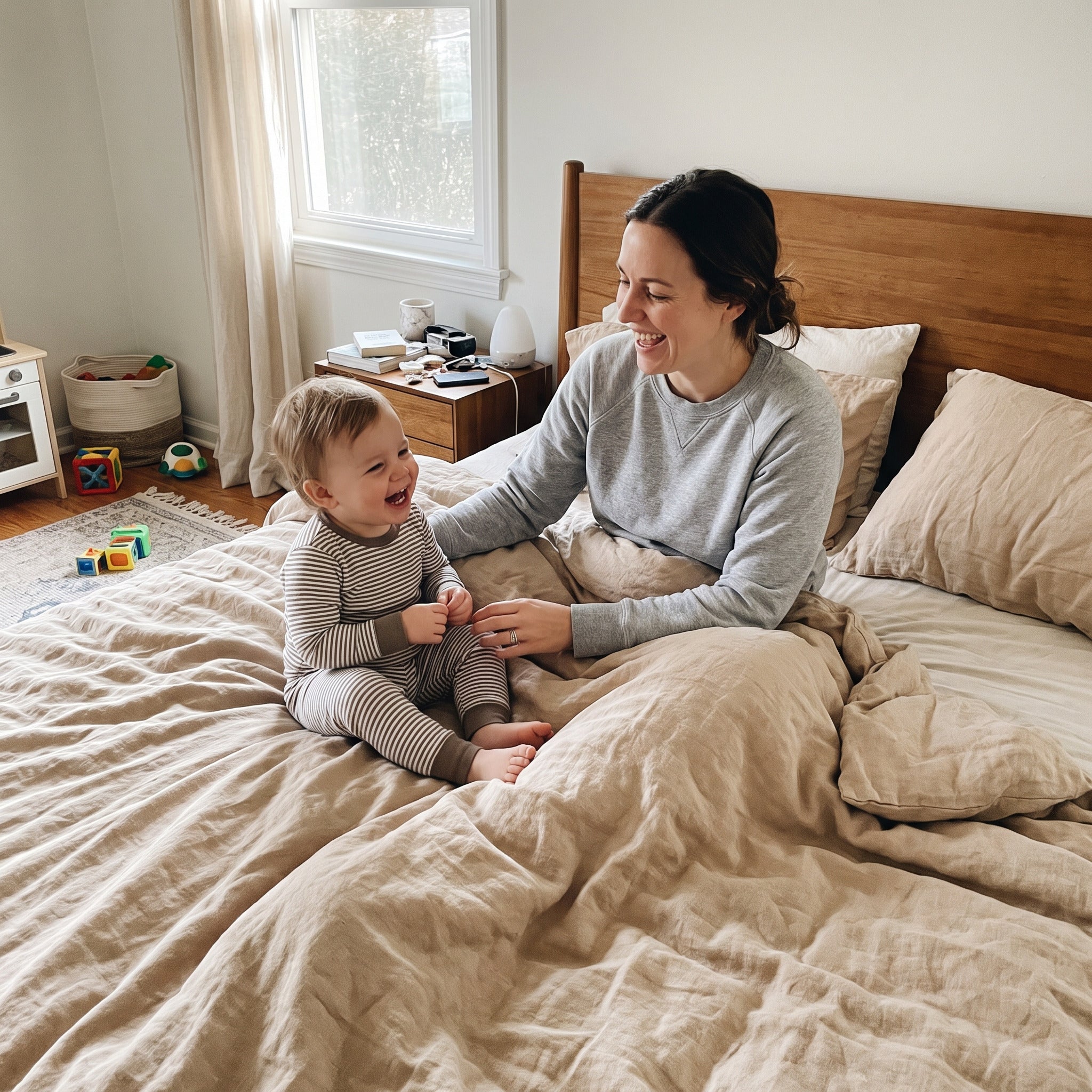
My daughter climbs into our bed most nights and she was the one who noticed. She said our bed feels like a hotel now.
VerifiedAmanda W.The fitted sheet actually stays on. I have a 14 inch mattress with a topper and it still tucks under with room to spare.
VerifiedSusan D.I am a light sleeper and I notice fabric. These do not cling and they never get that clammy feeling around 4am.
VerifiedEllen T.
Ordered these after months of looking. Tracking updated the whole way through, which is not something I can say about the last set I bought online.
VerifiedRachel M.
Went with the sage green and it is the exact soft, muted color from the photos. Nothing neon, nothing that fights the rest of the room.
VerifiedKaren B.I washed them three times before deciding and they only got better. That is the opposite of every other sheet I have owned.
VerifiedLinda H.The gray reads warm, not cold. Six weeks in there is no pilling and no thin spots, it still looks like the day it arrived.
VerifiedNancy P.Free USA express shipping · 30 night trial · Free returns
Sources
Show the 13 sources
- Harding EC, Franks NP, Wisden W. The Temperature Dependence of Sleep. Frontiers in Neuroscience, 2019;13:336. Falling asleep and a fall in core body temperature happen together; the body sheds heat through the skin to start sleep. Source
- Okamoto-Mizuno K, Mizuno K. Effects of thermal environment on sleep and circadian rhythm. Journal of Physiological Anthropology, 2012;31:14. Heat exposure under bedding increases wakefulness and reduces slow-wave and REM sleep. Humid heat makes it worse. Source
- Sleep Foundation. The Best Temperature for Sleep. The recommended bedroom range is 60 to 67 degrees Fahrenheit. Source
- Gallup, 2023. Sleep Temperature Linked to Overall Sleep Quality, Wellbeing. 57% of US adults report sleeping too hot at least occasionally; 14% always or most of the time. Source
- Amerisleep survey of 1,008 US adults. 52% identify as hot sleepers, and 94% of those wake at least once a night because of heat. Source
- Textile Learner. Linen (Flax) Fiber: Properties. Flax holds around 10% moisture and can absorb up to 20% of its own weight before it feels damp, then releases it quickly. Source
- Fibers and Polymers, 2026. Synergistic design of linen/cotton blended knitted fabrics. 100% linen scored the highest overall moisture-management capacity of the fabrics tested, with a 4.5 second wetting time. Source
- Comparing Sensorial Comfort Properties of Cotton, Cotton/Linen and Linen Knitted Fabrics, 2024. Linen shows higher thermal conductivity than synthetic blends, so it moves body heat away faster. Source
- IntechOpen, 2022. The Effect of Laundering on the Physical and Thermal Properties of Phase Change Textile Materials. Repeated washing damages the cooling microcapsules and lowers the thermoregulating effect. Source
- Anson G, Kane MA, Lambros V. Sleep Wrinkles: Facial Aging and Facial Distortion During Sleep. Aesthetic Surgery Journal, 2016;36(8):931-940. "Compression, shear, and stress forces act on the face in lateral or prone sleep positions." Source
- SSRS. How the American Public Sleeps, September 2024, 3,364 US adults. "69% of Americans say they usually sleep on their sides, 19% on their backs, and 12% on their stomachs." Source
- Gerhardt LC, Strassle V, Lenz A, Spencer ND, Derler S. Influence of epidermal hydration on the friction of human skin against textiles. Journal of the Royal Society Interface, 2008;5(28):1317-1328. Friction rose in step with skin moisture; female skin was more moisture-sensitive; skin against completely wet fabric had more than twice the friction of natural skin on dry fabric. Source
- Catovic C et al. Cotton and Flax Textiles Leachables Impact Differently Cutaneous Staphylococcus aureus and Staphylococcus epidermidis Biofilm Formation and Cytotoxicity. Life (Basel), 2022;12(4):535. "Crude flax showed an inhibitory potential on S. epidermidis bacterial lawns whereas cotton had no effect"; flax extracts reduced biofilm formation. A laboratory finding on fibre chemistry, not a clinical result. Source